
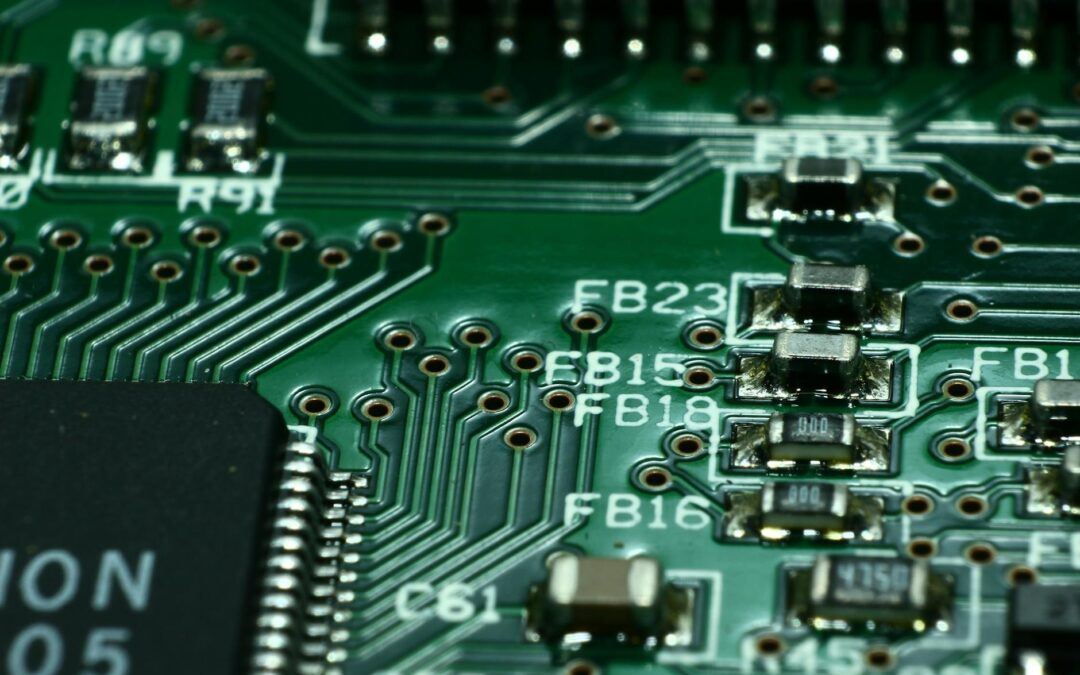
Discover the fascinating journey of artificial intelligence from its origins with Turing to the revolutionary breakthroughs made by Tesla.

Table of Contents
Artificial intelligence, or AI, has become an increasingly prominent topic in the world of technology and innovation. From the automated recommendation systems of Netflix to the self-driving cars of Tesla, AI is shaping the way we live and work. But how did we get here? Let’s take a journey through the history of AI, exploring key milestones and breakthroughs that have paved the way for the modern era of artificial intelligence.
Origins of AI
The concept of artificial intelligence dates back to the 1950s, when mathematician Alan Turing proposed the idea of a machine that could think like a human. Turing’s famous Turing Test challenged the notion of what it means to be intelligent, inspiring researchers to explore the potential of computers to mimic human cognition.
Milestones in AI Development
One of the earliest breakthroughs in AI was the creation of the first artificial neural network in the late 1950s. This network, inspired by the structure of the human brain, laid the foundation for machine learning algorithms that are used in AI systems today.
In 1997, IBM’s Deep Blue chess-playing computer famously defeated world chess champion Garry Kasparov, showcasing the power of AI in complex problem-solving tasks. More recently, the development of deep learning algorithms has revolutionized AI applications in areas like image recognition and natural language processing.
Key Breakthroughs in AI
The field of AI has witnessed several key breakthroughs in recent years that have propelled the technology forward. The development of AlphaGo, a computer program that defeated the world champion in the game of Go, demonstrated the potential of AI in strategic decision-making.
Advancements in reinforcement learning, a type of machine learning that uses rewards and punishments to train algorithms, have enabled AI systems to learn and adapt in real-time. Companies like Google, Amazon, and Facebook are leveraging these technologies to improve their products and services.
Applications of AI
AI is being used in a wide range of industries and applications, from healthcare to finance to agriculture. In healthcare, AI algorithms are being used to analyze medical images, diagnose diseases, and personalize treatment plans for patients.
Financial institutions are using AI to detect fraud, automate customer service, and predict market trends. In agriculture, AI-powered robots and drones are revolutionizing crop monitoring and management, leading to increased efficiency and sustainability.
Benefits of AI
The benefits of AI are numerous and far-reaching. AI has the potential to increase productivity, reduce costs, and improve decision-making across industries. By automating routine tasks and providing data-driven insights, AI can free up human workers to focus on more creative and strategic work.
| Year | Advancement |
|---|---|
| 1936 | Alan Turing proposes the concept of a universal machine capable of computing anything that is computable. |
| 1956 | John McCarthy coins the term “artificial intelligence” and organizes the Dartmouth Conference, marking the official birth of AI as a field of study. |
| 1980s | The development of expert systems, a form of AI that mimics the decision-making abilities of a human expert in a specific domain. |
| 1997 | IBM’s Deep Blue defeats world chess champion Garry Kasparov, showcasing the power of machine learning and algorithms in playing games. |
| 2012 | Google’s neural networks win the ImageNet competition, significantly advancing the capabilities of deep learning and image recognition. |
| 2020s | Advancements in natural language processing and the rise of AI-powered assistants like Siri, Alexa, and Google Assistant. |
In healthcare, AI can help doctors diagnose diseases more accurately and efficiently, leading to better patient outcomes. In transportation, AI-powered systems can optimize traffic flow, reduce accidents, and improve the overall safety of roadways.
Challenges and Ethical Concerns
Despite its many benefits, AI also presents challenges and ethical concerns that must be addressed. The rise of AI-powered automation has raised concerns about job displacement and income inequality. Companies are facing criticism for biases in AI algorithms that can perpetuate discrimination and reinforce existing social inequalities.
Privacy is another major concern, as AI systems collect and analyze vast amounts of personal data. Issues of data security and transparency are key considerations in the development and deployment of AI technologies.
Future Directions of AI
The future of AI holds great promise for further innovation and advancement. As AI technologies continue to evolve, we can expect to see more sophisticated AI systems that are capable of complex reasoning and decision-making. The integration of AI with other emerging technologies like robotics, IoT, and blockchain will open up new possibilities for AI applications.
Researchers are exploring the concept of artificial general intelligence (AGI), which aims to create AI systems that can perform any intellectual task that a human can. While AGI remains a long-term goal, advancements in machine learning and neural networks are bringing us closer to achieving this vision.
Can Skynet Happen?
In popular culture, the idea of a superintelligent AI taking over the world, as depicted in the “Terminator” movie franchise, has sparked fears of a real-life Skynet scenario. While the likelihood of a catastrophic event like Skynet is low, experts warn of the potential dangers of uncontrolled AI development.
To prevent a Skynet-like scenario, researchers and policymakers are advocating for responsible AI development practices, including transparency, accountability, and ethical oversight. By prioritizing safety and ethical considerations in AI research and deployment, we can mitigate the risks associated with superintelligent AI systems.
As we continue to explore the world of artificial intelligence, it is important to remain vigilant and proactive in addressing the challenges and ethical concerns that accompany AI advancement. By embracing the benefits of AI while mitigating its risks, we can harness the power of artificial intelligence to create a better future for humanity.
FAQ
What are the key milestones in the development of artificial intelligence?
Answer 1: Key milestones in AI development include the creation of the first artificial neural network, IBM’s Deep Blue defeating world chess champion Garry Kasparov, and the development of deep learning algorithms.
What are some common applications of artificial intelligence?
Answer 2: AI is used in healthcare for medical image analysis, in finance for fraud detection, and in agriculture for crop management. Other applications include transportation optimization and personalized customer service.
What are the benefits of artificial intelligence?
Answer 3: AI can increase productivity, reduce costs, and improve decision-making across industries. It automates routine tasks, provides data-driven insights, and enhances efficiency in various sectors.
How can we prevent a Skynet-like scenario with artificial intelligence?
Answer 4: To prevent a potential catastrophic event like Skynet, responsible AI development practices must be prioritized. This includes transparency, accountability, and ethical oversight in AI research and deployment to mitigate risks associated with superintelligent AI systems.
Recent Comments